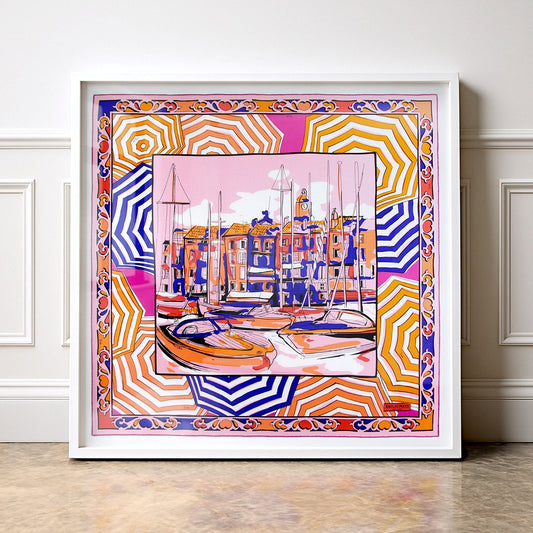
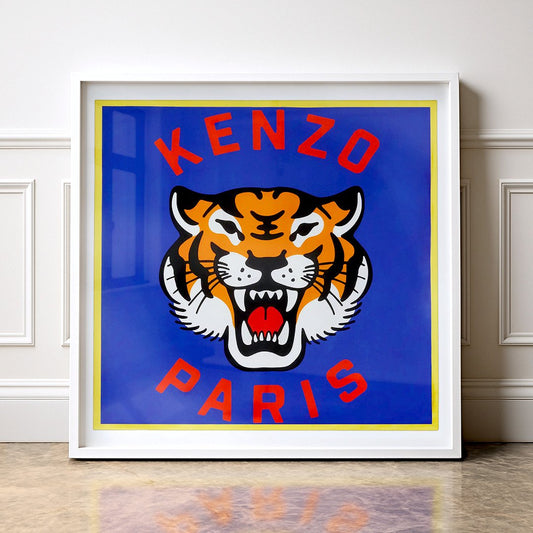
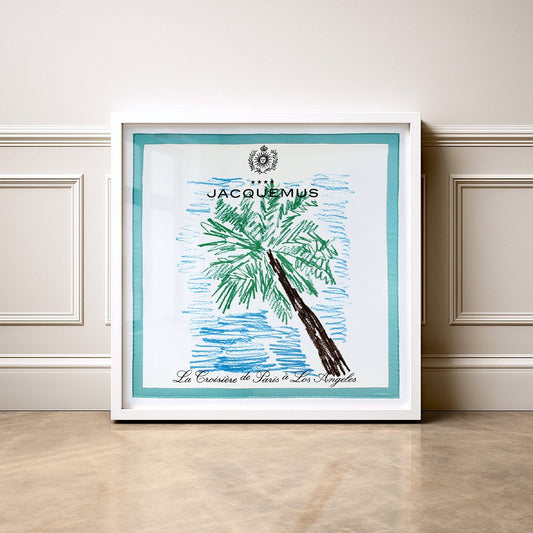
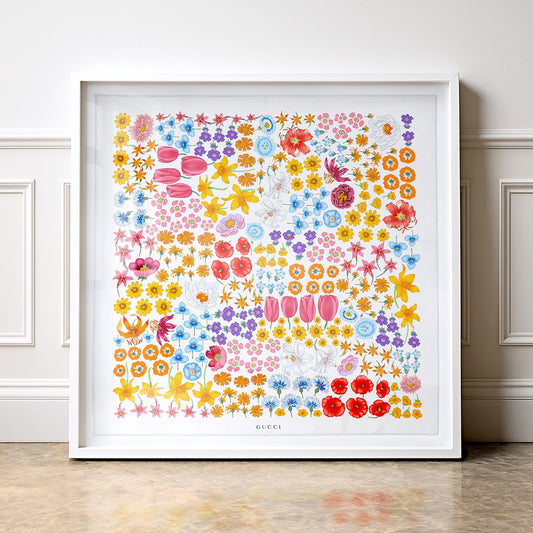
Why Interior Designers Are Framing Silk Scarves Instead of Prints
Walk into the home of a leading interior designer and you'll quickly notice something.
The most memorable rooms rarely rely on obvious choices.
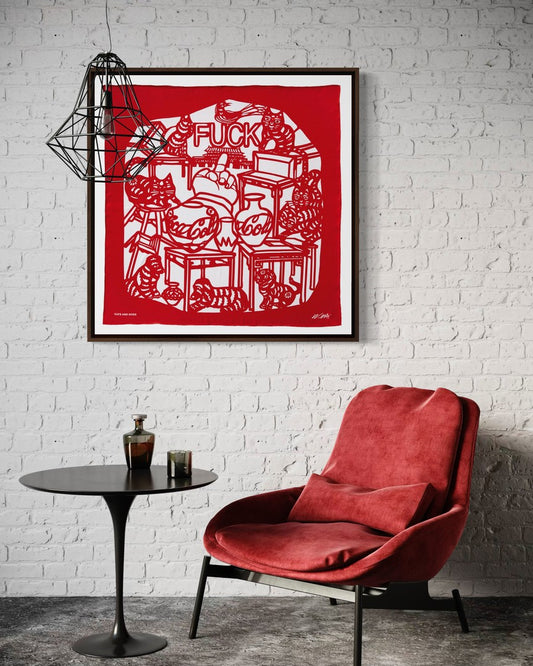
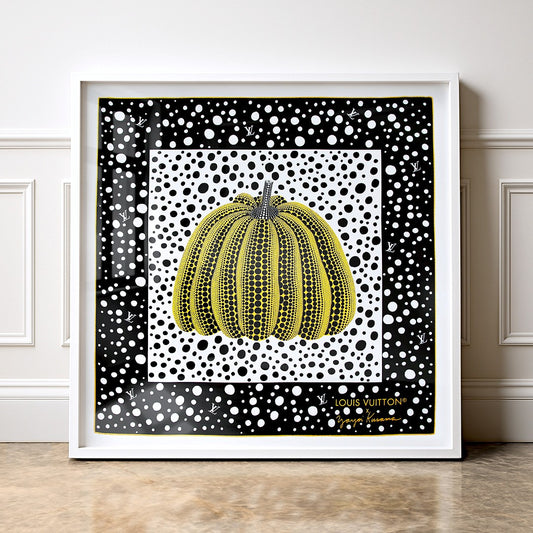
While traditional prints still have their place, many designers are increasingly looking beyond conventional wall art in search of pieces that feel more distinctive, personal and sophisticated. One category gaining particular attention is framed silk scarves.
Once considered purely fashion accessories, luxury silk scarves are now appearing on walls in private homes, boutique hotels and designer showhouses around the world.
But why are interior designers choosing framed scarves instead of prints?
The answer lies in what modern clients want from their interiors.

The Search for Originality
The popularity of online art retailers has made good design more accessible than ever before.
Unfortunately, it has also made many interiors look remarkably similar.
The same prints appear repeatedly across social media, hotels, show homes and private residences. As a result, designers are increasingly searching for artwork that feels more individual and less expected.
A framed silk scarf immediately achieves this.
Unlike a mass-produced print, many luxury scarves are produced in relatively small quantities and can become increasingly difficult to source over time. The result is an artwork that feels unique, personal and often impossible to replicate.
In luxury interiors, exclusivity matters.
Silk Adds Texture That Prints Cannot
One of the biggest limitations of traditional prints is that they are inherently flat.
Even the most beautiful image remains a printed surface behind glass.
Silk behaves differently.
The fabric catches and reflects light throughout the day, creating subtle movement and dimension within the frame. Every hand-rolled edge, fold and stitch contributes to the visual experience.
This additional layer of texture helps a room feel richer and more considered.
Designers often speak about the importance of layering materials within a space. Wood, stone, metal, linen and wool all contribute to a room's character.
Silk introduces another layer entirely.

They Bridge Art, Fashion and Design
The most interesting interiors rarely stay within one category.
Interior designers often combine fine art, antiques, furniture, fashion and decorative objects to create spaces that feel collected rather than decorated.
Framed silk scarves naturally sit at the intersection of these worlds.
They are simultaneously fashion, textile design and artwork.
This makes them particularly appealing to clients who appreciate craftsmanship, collecting and design history.
A framed scarf often feels more layered and culturally interesting than a conventional print because it carries stories from multiple creative disciplines.

Many Luxury Scarves Are Already Works of Art
There is a common misconception that silk scarves are fashion products first and artistic works second.
In reality, the opposite is often true.
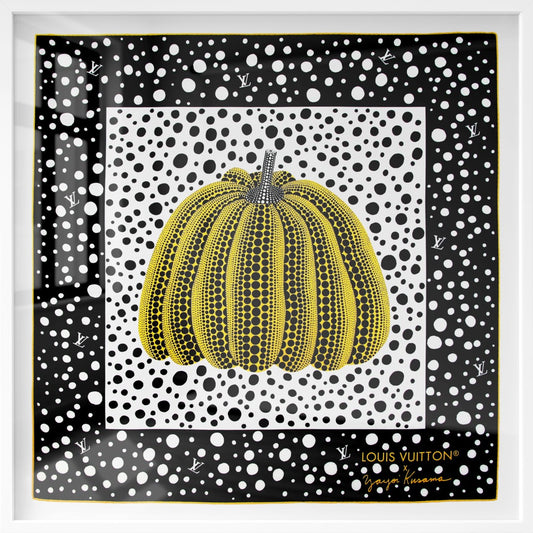
Many luxury fashion houses spend years commissioning artists, illustrators and designers to create original artworks specifically for silk.
Brands such as Hermès, Gucci, Louis Vuitton and Emilio Pucci have collaborated with some of the most talented creative minds of their generation.
The finished scarf is often the first and only medium through which that artwork was produced.
When framed, these designs reveal a level of detail and artistry that many people never notice when the scarf is folded or worn.
Clients Want Artwork With A Story
Interior designers understand that clients rarely fall in love with an object simply because it looks attractive.
People connect with stories.
A framed silk scarf often comes with a fascinating narrative.
It may have been designed to commemorate a historical event. It may represent the work of a celebrated artist. It may have been produced in limited numbers or become highly sought after amongst collectors.
These stories create emotional value that extends far beyond decoration.
Guests frequently ask about framed scarves because they feel unexpected.
That curiosity becomes part of the artwork itself.

Scarves Offer Sophisticated Colour Palettes
Luxury fashion houses invest enormous resources into colour development.
As a result, many silk scarves feature exceptionally refined palettes that translate beautifully into interiors.
Interior designers often use scarves to introduce colour in a way that feels elegant rather than overwhelming.
Soft botanical greens, rich terracottas, warm neutrals, delicate blues and complex jewel tones frequently appear within scarf designs.
Because these colours were developed by some of the world's leading design teams, they often feel naturally balanced and harmonious within a room.
They Feel Curated Rather Than Purchased
Perhaps the biggest reason interior designers are embracing framed silk scarves is that they make a room feel curated.
Great interiors rarely look as though everything was purchased at the same time from the same source.
Instead, they feel collected over time.
A framed silk scarf introduces an element of discovery. It suggests the owner has found something unusual rather than simply selecting artwork from a catalogue.
In an era where originality has become increasingly difficult to achieve, that sense of discovery is incredibly valuable.
The Future of Wall Art
As interior design continues to move away from formulaic trends and towards personal expression, unconventional forms of artwork are becoming more desirable.
Framed silk scarves offer something that many traditional prints cannot.
They provide texture, craftsmanship, collectability, artistic heritage and individuality within a single piece.
Most importantly, they surprise people.
And the most memorable interiors have always been built around the unexpected.
For interior designers seeking artwork that feels elegant, distinctive and deeply personal, framed silk scarves have become far more than a passing trend.
They are quietly establishing themselves as one of the most compelling forms of wall art available today.