How to Frame a Silk Scarf
Framing a silk scarf is not the same as framing a print. Silk is a delicate, natural fibre. It reacts to pressure, light, and adhesives in ways that can permanently damage the piece, often without it being obvious at first.
If you’re searching how to frame a silk scarf, how to display a Hermès scarf, or how to hang silk scarves on a wall, the reality is simple:
Most methods you’ll find online are wrong. They prioritise speed, cost, or convenience—not preservation. If a silk scarf is going to be framed properly, there is one method that works.
 Scarf Story, Hermes & Jonathan Burton, 90cm
The Best Way to Frame a Silk Scarf
Archival Hand Mounting (Conservation Standard)
Every scarf is carefully prepared and hand-stitched onto a custom mount using conservation-grade materials.
- Multi-layered backing for stability
- Pristine top layer to enhance colour and clarity
- Secured using an invisible thread technique through the rolled hem
This avoids the common failures seen in some scarf framing methods.
- No adhesives
- No surface tension
- No permanent alteration
The scarf remains structurally intact and can be safely removed in the future. This is the method used when silk is treated as an artwork, not a decorative object.
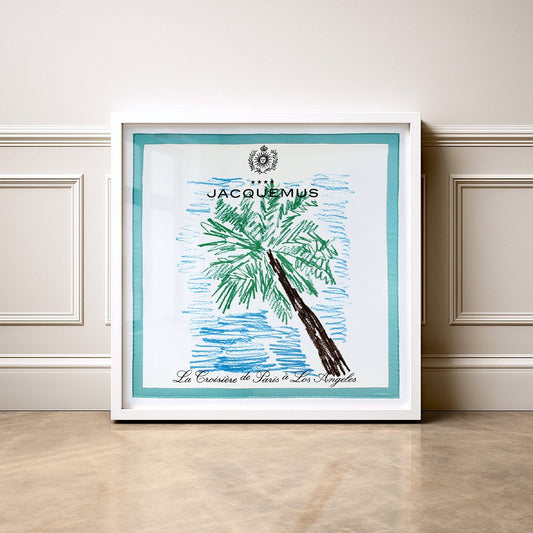
 Jacquemus, Le Palmier Palm Tree Print, 70cm
A Process That Cannot Be Rushed
Framing a silk scarf properly is not a quick or standard process. It requires specialist knowledge, controlled conditions, and time. Our process typically takes 6–8 weeks.
During the pressing stage, the scarf is monitored regularly over an extended period to ensure the fibres fully relax and stabilise before mounting.
The multi-layered backing board is then made by hand for each individual piece, ensuring the correct level of support, tension and balance.
Finally, the mounting itself is carried out by an expert. The scarf is carefully positioned and pinned before being hand-stitched in place, an exacting process that takes around a day to complete.
Only once this is finished is the piece ready to be passed to the framer.
Unlike most framing studios, which can often be dusty or cluttered environments, working with silk requires a meticulously clean, controlled space. Silk is highly sensitive, and even the smallest particles can settle into the fibres and become visible once framed. Any imperfection introduced at this stage is permanent.
- Explore examples in our Framed Silk Scarf Collection
- Learn more about our Bespoke Framing Service for Silk Scarves

Kenzo, Lucy Tiger, 90cm
Shadow Box Framing (Why Space Is Essential)
Silk needs space to retain its structure. Our shadowbox frames create a gap between the scarf and the glazing, preventing compression and long-term damage.
This ensures:
- Hand-rolled edges remain intact
- The silk retains depth and movement
- No pressure is applied to the fibres
In contrast, framing a silk scarf flat against glass may appear neat, but it crushes the hems and distorts the fabric. Treating a scarf like a print damages the silk and reduces its integrity.
As standard, we use UV-protective plexiglass, offering:
- Protection against fading
- Shatter resistance (safer than standard glass)
For high-end projects, we use Art Glass, which provides even higher UV protection, reduces reflection, and enhances clarity.
Our signature white-painted wood frames are designed to work across modern interiors, with bespoke options available.
- View our Ready to Ship Framed Scarves
- Commission a Bespoke Framed Silk Scarf
 Hermes, Funny Ice Cream, 70cm
Common Mistakes When Framing a Silk Scarf
If you’re researching DIY silk scarf framing or cheap scarf framing ideas, these are the issues to avoid.
1. Using Tape or Glue
Adhesives stain fibres and leave permanent residue. This cannot be reversed.
2. Pressing the Scarf Against Glass
This flattens the rolled hems and removes the natural structure of the silk. Over time, it leads to visible damage.
3. Using Magnetic or Clip Frames
Often seen in retail displays (including Hermès stores), these are designed for temporary presentation—not long-term framing.
They offer no protection from light, dust, or movement.
4. Framing Without Proper Mounting
Unsupported scarves will shift, sag, and distort over time. What looks acceptable initially will not last.
5. Skipping Preparation
A scarf must be properly pressed before framing. Creases and fold lines will otherwise be locked in permanently.
6. Moisture
Any residual moisture—whether from the air or pressing—can distort silk quickly. The fabric must be completely dry and stable before mounting.
 Pucci, Saint Tropez, 90cm
Why Framing a Silk Scarf Correctly Matters
Searches like “how to frame a Hermès scarf” or “best way to display silk scarves” often focus on appearance. But the real issue is preservation. A silk scarf, especially from houses like Hermès or artist collaborations, is a textile artwork.
Framed correctly:
- It becomes a long-term piece of wall art
- Colour and structure are preserved
- The piece retains its value
Framed incorrectly:
- The silk is permanently altered
- The finish degrades over time
- The piece loses integrity
The Bottom Line
There are many ways to frame a silk scarf. Only one is designed to protect it.
Any method involving glue, pressure, or shortcuts will degrade the silk over time. It may not be immediate, but it is inevitable.
If the goal is to preserve both the appearance and integrity of the scarf, archival hand mounting within a shadow box frame is the gold standard.
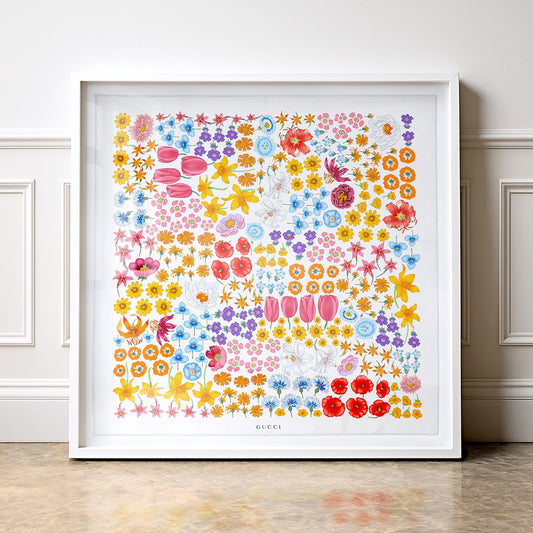
 Gucci, Floral Multicolour 90cm
Continue Exploring
FAQs: Framing a Silk Scarf
What is the best way to frame a silk scarf?
The best way to frame a silk scarf is through archival hand mounting, where the scarf is hand-stitched onto a conservation-grade backing and placed within a shadow box frame. This method avoids adhesives, prevents pressure damage, and preserves the structure and value of the silk.
Can you frame a silk scarf without damaging it?
Yes—but only if the correct method is used. Silk scarves should never be glued, taped, or pressed against glass. Proper framing involves hand stitching through the rolled hem, using acid-free materials, and allowing space between the silk and the glazing.
How do you frame a Hermès scarf?
Framing a Hermès scarf requires a conservation approach. The scarf should be professionally pressed, hand-stitched onto a mount, and framed in a shadow box with UV-protective glazing. This protects the hand-rolled edges and maintains the integrity of the silk.
Can I frame a silk scarf myself (DIY)?
DIY framing is possible, but most methods involve adhesives, tape, or pressure mounting—all of which damage silk over time. For valuable or collectible scarves, professional framing is strongly recommended to avoid permanent alteration.
Why shouldn’t a silk scarf touch the glass?
Silk should not be pressed against glass because it crushes the hand-rolled hems and compresses the fibres. Over time, this leads to distortion, loss of texture, and visible damage.
How long does it take to frame a silk scarf properly?
Proper silk scarf framing typically takes 6–8 weeks. This includes careful pressing, stabilisation, hand mounting, and professional framing. The process cannot be rushed without compromising the result.
Will framing a silk scarf protect it from fading?
Yes—if UV-protective glazing is used. High-quality plexiglass or art glass reduces light exposure, helping to preserve the colour and detail of the scarf over time.
Does framing a silk scarf reduce its value?
Framed correctly, a silk scarf retains its value and can even be elevated as a display piece. However, poor framing—especially using glue, tape, or compression—can permanently damage the scarf and reduce its value.